I felt the need for a radical change
7 December 2019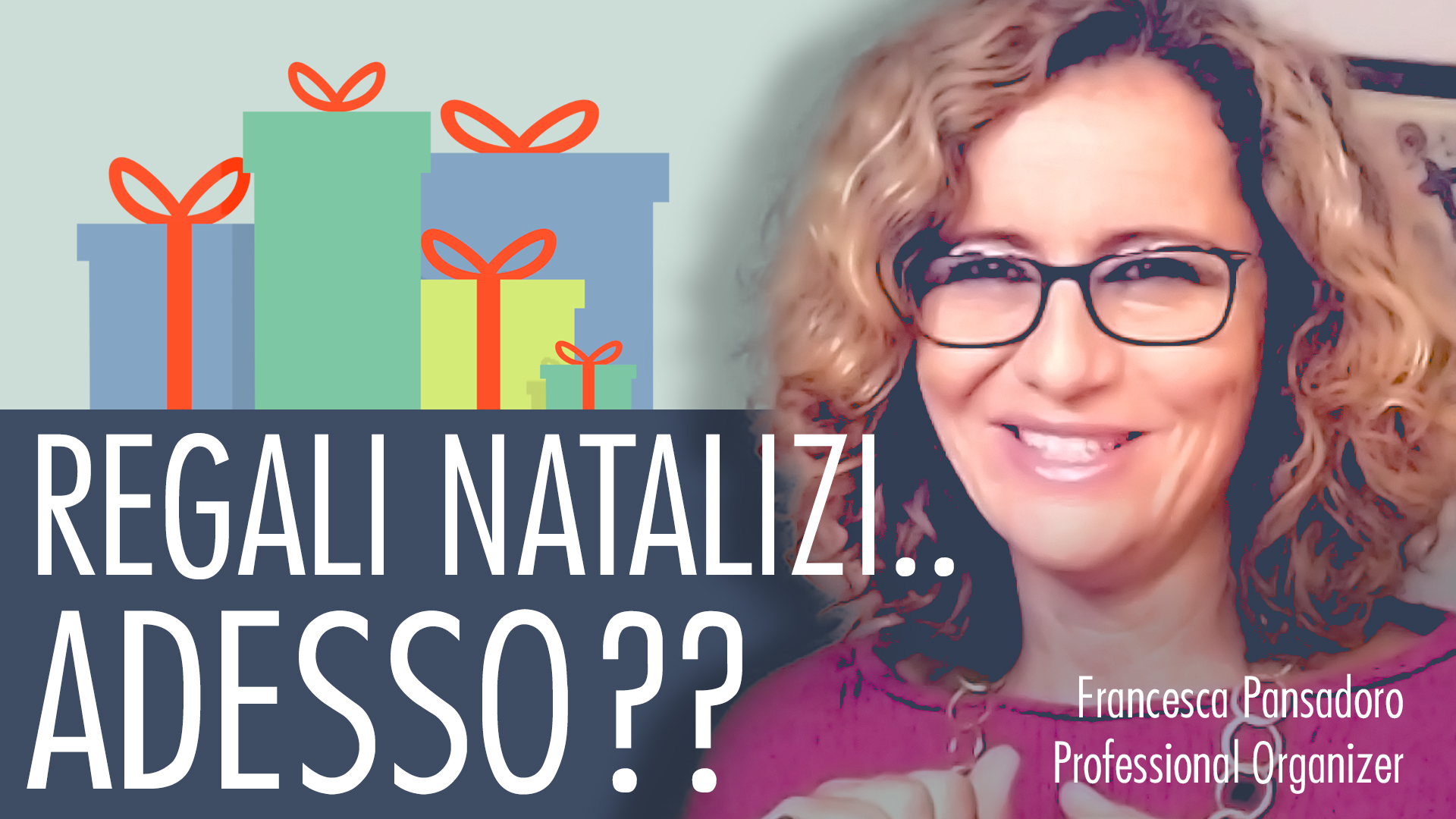
Christmas gifts-now?
12 January 2020
As APOI member professional organizers, we have regulations(the main reference is Law 4/2013 of the Italian Ministry of Economic Development) and a code of ethics to comply with. This document, which we sign when we register, tells us how to behave toward our colleagues and our clients.
The basic principles of the code of ethics concerning customers are:
- To serve its customers with integrity, competence and objectivity, treating them with respect and courtesy;
- Provide their services only in areas in which they are qualified;
- Represent the P.O. profession with precision and accuracy;
- Keep all information provided by clients, both personal and professional, confidential;
- Properly use customers' information only with their permission;
- communicate
fees and charges to clients in advance, requiring payments
that are appropriate, legitimate, and commensurate with your experience, the services
you provide, and the responsibilities you accept; - Maintain a high standard of personal conduct to bring more credit to the profession;
- commit
to acquire the necessary knowledge, skills and training
to be competent and relevant to address customer needs.
Equally important is the indication of what P.O.s should not do:
- ascertain any kind of clinical pathology (such as hoarding disorder and any pathology leading to hoarding);
- Declare to perform therapeutic interventions on any clinical pathology;
- Accept organizing interventions without the approval of the owner of the property to be organized.
The code of ethics, therefore represents our ethics, so customers always come first.
But what are the difficulties that P.O.'s may face?
It doesn't matter what field P.O.'s work in, P.O.'s must first and foremost be able to listen, develop a good level of empathy and trust with clients, but at the same time be very clear about the boundaries to be set.
Clients don't know what the boundaries are, they don't know them (especially if it is the first time they seek our advice as an organizational professional), so it is up to us to delineate them. We establish a relationship of trust and make the roles very clear: we are not psychologists, life coaches, or counselors.
P.O.'s enter people's lives, access their intimacy, sometimes touch human frailties: clients who ask P.O.'s for help to improve their lifestyles put their emotions on the line. P.O.s must clearly communicate what their counseling offers and what it does not.
Communication skills, therefore, play an important role; working on this aspect allows us to develop our professionalism to the fullest. To understand how important it is to develop these skills, one need only think of when entering a home where we often face family dynamics, or at work with the delicate relationships between colleagues, or when meeting clients who experience chronic disorganization.
In my opinion, capable and professional P.O.s not only know how to come up with practical and problem-solving solutions to clients' needs, but are also (and more importantly) able to bring to life that delicate balance in which listening, trust, empathy, and boundaries are given due weight. Clients must feel understood, grasp the P.O.'s involvement and helpfulness, and be clear about the boundaries in the relationship.
Training and experience then come to our aid, ancient allies of all professions: they allow us to build our authority and professionalism day after day, allowing this wonderful profession to grow in Italy as it already has in the rest of the world.